ATACO draws seamless deep drawn shells up to 16 inches deep and 48 inches in diameter, in material up to 0.8 inches thick, on mechanical and hydraulic presses up to 1,700 tons. We design and build the tooling in our own tool room, we simulate the draw before the first piece of steel moves, and we have been doing it in Wisconsin since 1946.
Send us the print. We will tell you whether your part draws in one hit, needs a redraw station, or should be made another way entirely.
16″Max depth of draw
1,700Tons of force
48″Max diameter
±.010″Tolerance
1946Drawing since
What Are Deep Drawn Shells?
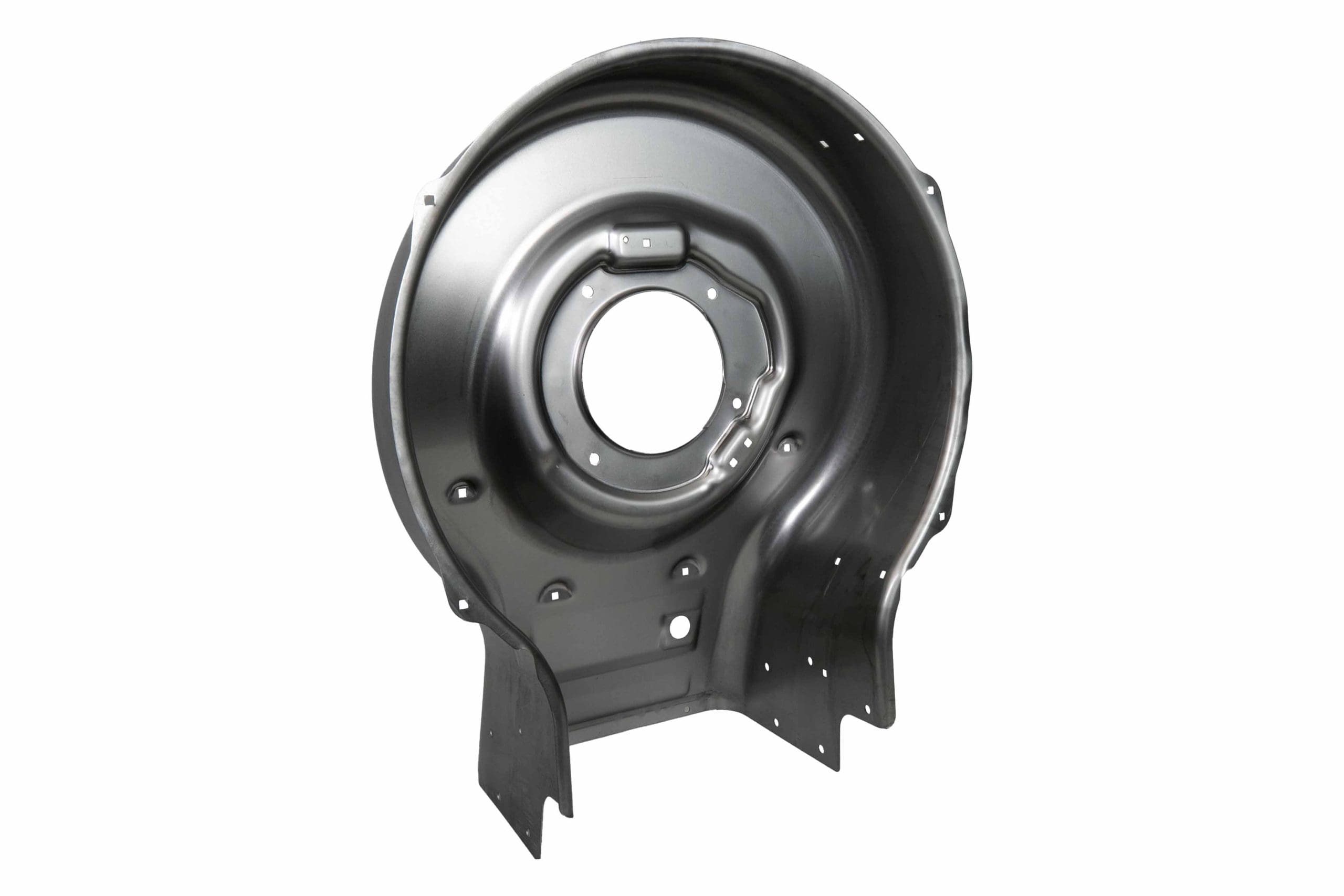
Deep drawn shells are hollow metal parts, commonly used as covers, housings or containers.
Deep draw stamping makes seamless metal parts with a better surface finish compared to other manufacturing processes. There are no weld seams to grind, leak, or crack, and the wall runs continuous from the flange to the bottom of the part.
Complex deep drawn shells may include features such as holes, recesses, bump-outs or non-symmetrical geometries. Fuel tanks often have unusual topology in a given dimension, as well as features like bending, flanging and openings for fuel lines.
The Deep Drawing Process, Step by Step
Deep drawing, also called deep draw metal stamping, turns a flat blank into a hollow part by pulling it into a die with a punch. There is no cutting and no joining. The metal flows. That is what makes a drawn shell seamless, and it is why a drawn part can hold pressure that a welded box cannot.
- Blanking. We cut a flat disc or shape from coil or sheet. Blank size is calculated from the finished surface area of the part plus trim allowance. Get this wrong and every downstream station fights it.
- First draw. The punch forces the blank through the draw ring while a blank holder applies pressure to the flange. Too little holder pressure and the flange wrinkles. Too much and the wall tears. Setting that window correctly is most of the craft in deep drawing.
- Redraw. Draw ratio, the blank diameter divided by the punch diameter, sets the limit at every station. A single draw can usually reduce a blank to roughly half its starting diameter. Anything deeper needs successive redraw stations, each one taking the part a little further. ATACO runs multi-station redraws to reach 16 inches of depth.
- Trim and pierce. The drawn shell comes off the press with an uneven flange. We trim it to the print and add holes, slots, and flares. On low-volume parts we do this with the 5-axis laser instead of building trim tooling, which takes real cost out of a short run.
- Secondary operations. Flange rolling, bending, reverse drawing, welding, and assembly happen after the draw. Everything on this list is done under our roof.
Between the print and the first article, our engineers run forming simulation on the part. The software shows where the material thins, where it wants to wrinkle, and how much force the draw needs, before we spend a dollar on tooling. That is why our first articles usually run right the first time.
Deep Drawn Shell Specifications
Capability ranges for deep drawn shells, housings, and other deep drawn parts. Final limits depend on material, geometry, and corner radii, so we confirm every part against your print before we quote it.
| Parameter | ATACO capability | Notes |
|---|---|---|
| Depth of draw | Up to 16″ | Multi-station redraw |
| Diameter | Up to 48″ | Round and non-symmetrical shapes |
| Material thickness | Up to 0.8″ (20 mm) | Light to heavy gauge |
| Press force | Up to 1,700 tons | Mechanical and hydraulic presses, beds to 72″ x 180″ |
| Tolerance | ±0.010″ | Confirmed against your print at quote |
| Materials | Carbon steel, stainless steel, aluminum, brass, copper, Inconel, titanium | Details below |
| Volumes | Prototypes to high-volume production | Short, medium, and long runs |
| Tooling | Designed and built in house | FASTFORM® Advanced simulation before tooling is built |
| Quality | ISO 9001:2015 certified | PPAP and first-article inspection support |
Shells and Housings We Draw
These are the eleven shell types we draw most often, grouped by the job they do. If your part is a hollow shape with a closed end, it probably belongs on this list. If it does not, send it anyway.
Hydraulic and Fuel Tanks
Drawing a tank as two half shells and joining them at one weld seam leaves far fewer seams to leak than a box built from flat sheet. We draw hydraulic tanks for earthmoving equipment and fuel tanks for motorcycles, then trim, pierce, and weld them in house. Our hydraulic and fuel tanks page covers welding and leak testing.
Mower Decks and Equipment Housings
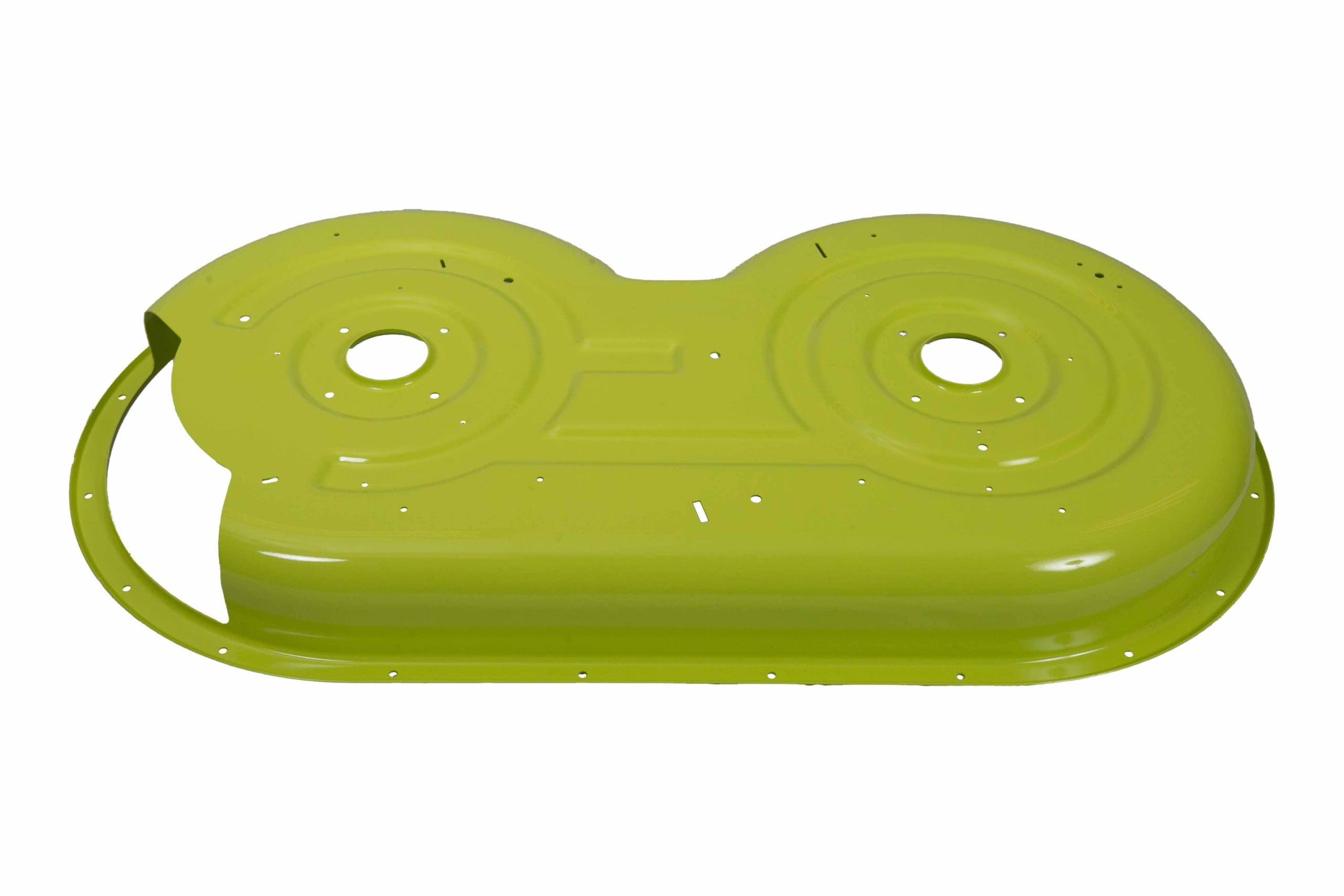
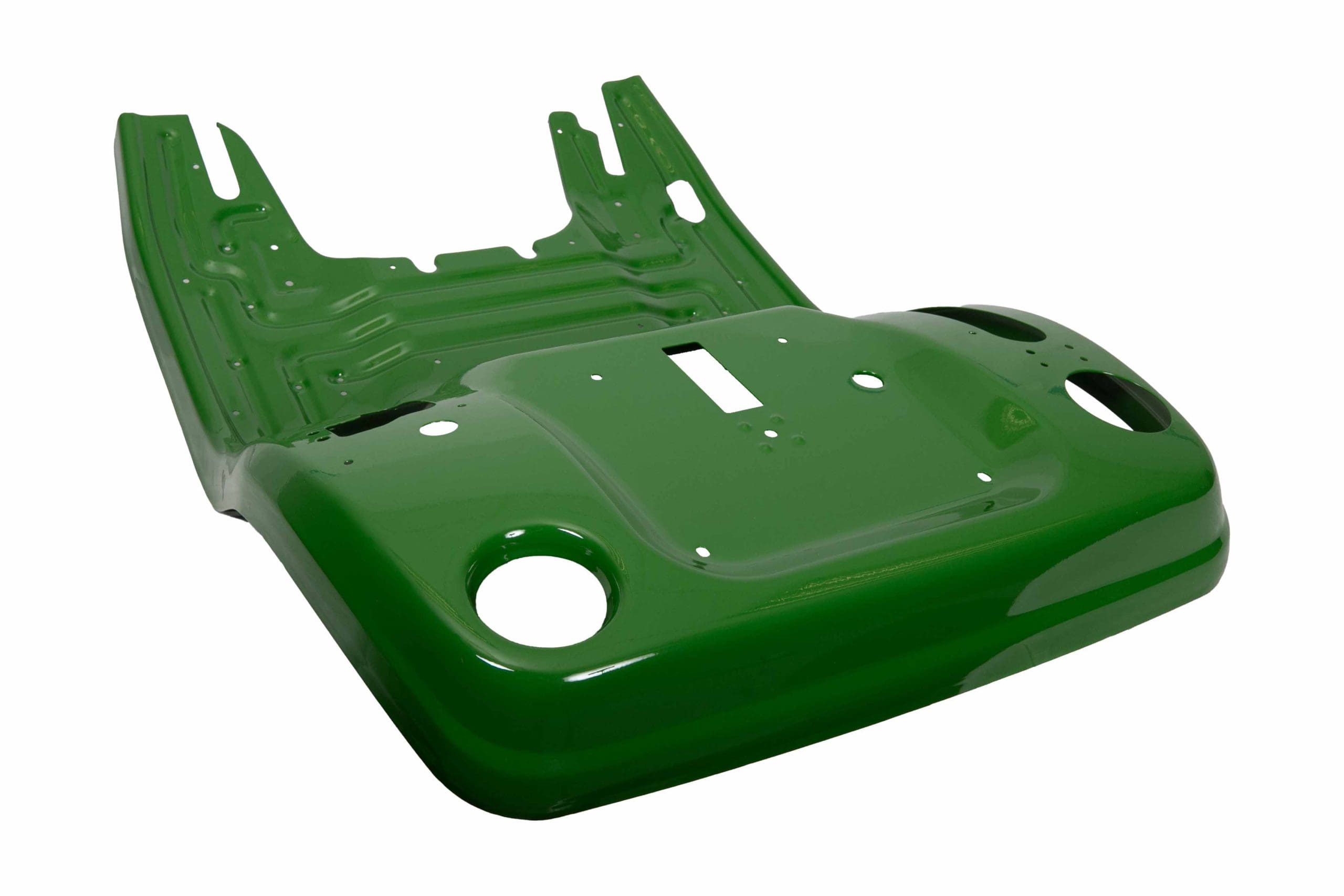
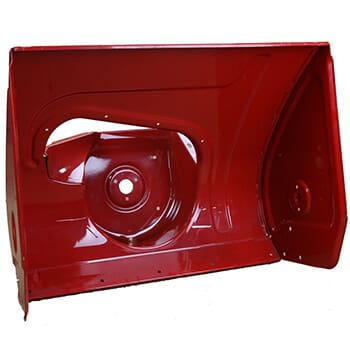
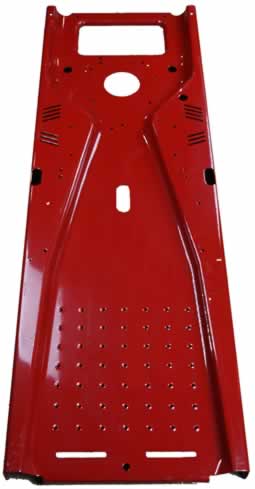
Mower decks are the classic deep drawn part: wide, deep, and full of ribs, domes, and mounting holes that have to land in the same place on every piece. We draw single-piece decks and snow thrower housings for lawn and garden OEMs, plus stainless sinks for commercial food service equipment.
Motor and Auger Housings
A housing has to hold bearings, shafts, and fasteners exactly where the print puts them, and it has to stay true under load. Drawing it from one blank keeps the wall continuous and avoids the weld distortion a fabricated housing has to fight. We draw auger housings and motor housings in both light and heavy gauge.
Filter, Condenser and Bearing Shells
Smaller shells, higher volumes, tighter repeatability. Oil filter shells, condenser shells, bearing shells, and socket shells are where a drawn part beats a machined or fabricated one on cost and part-to-part consistency. Cylindrical shells and half shells in steel, stainless, aluminum, and brass round out the list.
Materials We Draw
Formability is the whole ballgame in deep drawing. A material that stamps beautifully in a flat blanking die can split on the first draw. Here is what we run and what it is good for.
Carbon steel. The default for most deep drawn work. Draw-quality and extra-deep-draw grades give you the highest draw ratios at the lowest material cost. Nearly all of our hydraulic tanks and mower decks start here.
Stainless steel. Work hardens fast, so deep drawing stainless steel takes more redraw stations and sometimes an anneal between draws. Worth it when the part sees corrosion, wash-down, or food contact. We draw 304 and 316.
Aluminum. Light, drawable, and forgiving on tooling. Watch earing on high-ratio draws. Deep drawn aluminum enclosures and covers are common in powersports and electrical work.
Brass and copper. Excellent formability, popular for electrical and fluid components where conductivity matters.
Inconel and titanium. Difficult, expensive, and occasionally the only answer for high-temperature or high-strength parts. We draw both.
Heavy gauge. Most deep draw shops top out well under a quarter inch. We draw to 0.8 inches, which is a real dividing line if your part is structural rather than cosmetic.
In-House Tooling and Forming Simulation
With a skilled engineering support team and an in-house tool and die shop, ATACO can produce the tooling needed for any deep drawing project. No matter how simple or complex your drawn shells are, we can produce the custom tooling needed to deliver perfect, perfectly repeatable parts.
Maximize the cost-effectiveness of your deep drawn shell production with ATACO’s pre-design technical support for manufacturability. ATACO engineers use advanced simulation software for sheet metal forming to analyze part and process feasibility, enhancing design capability while reducing time to production.
That software is FASTFORM® Advanced from Forming Technologies. It predicts blank shape, thinning, wrinkling, and springback before the die is designed, and it produces first-time-correct dies in 90% of design cases. Design, build, and maintenance of the tooling stay in the same building as the presses, so when a part needs a change, the people who built the die are the ones who change it.
Forming simulation of a drawn part, run before any tooling is built.
Secondary Operations
Most drawn shells need more work after the draw. Here is what happens inside the die and what happens after it. Doing both under one roof means one supplier, one quality system, and no parts riding a truck across town between steps.
In-Press and Die Operations
- Piercing
- Slotting
- Flaring
- Forming
- Fluting
- Flange rolling
Post-Draw Operations
- Mechanical and laser trimming
- Press brake bending
- Reverse drawing
- Welding
- Assembly and finishing
If quantities are too low to justify tooling for these operations, we trim and pierce via 5-axis laser cutting. When a shell is one piece of a larger build, we weld, assemble, and finish it here and ship it as one of our fabricated assemblies.
Deep Drawn Shells for Your Industry
We draw shells and other deep drawn parts for lawn and garden OEMs, agricultural equipment builders, construction and heavy equipment manufacturers, commercial food service, powersports, material handling, rail, and defense. Each industry page covers the parts we make for that market.
The common thread is a part that has to be strong, repeatable, and cheaper to draw than to fabricate.
Deep Drawn Shell FAQs
16 inches, using multi-station redraws. Diameter goes to 48 inches and wall thickness to 0.8 inches.
Stamping is the umbrella term for press forming. Deep drawing is the specific process where the finished part is deeper than it is wide, formed by pulling metal into a die rather than cutting or bending it.
As a rule of thumb, one draw reduces a blank to about half its starting diameter. Past that you need redraw stations. Your material, thickness, and corner radii move that number in both directions, which is why we simulate first.
Yes. Design, build, and maintenance all happen in our own tool and die shop. No outside tooling vendor sitting between you and a running part.
We run prototypes, short runs, and full production. For very low volumes we trim and pierce on the 5-axis laser instead of building trim and pierce tooling, which changes the math on small orders.
Yes. Carbon steel, stainless, aluminum, brass, copper, Inconel, and titanium.
Request a Quote on Deep Drawn Shells
Send us a print, a model, or a sketch on the back of an envelope. Our engineers will come back with a manufacturability read and a real number, not a range.